
English 
T: +86-139-2641-8287
No.51, Chuangye Road, Taiping Town, Conghua District, Guangzhou City, Guangdong Province, China


Views: 0 Author: Site Editor Publish Time: 2026-07-17 Origin: Site


Upgrading a residential patio or designing a commercial storefront often brings unexpected challenges. You might envision lush greenery outlining your space. Rigid spatial limits frequently stand in your way. Traditional in-ground landscaping presents serious roadblocks for most property owners. Poor native soil complicates even simple planting projects. Permanent spatial commitments reduce your future site flexibility. High excavation costs quickly consume your entire landscaping budget.
Property owners now demand better alternatives. Facility managers increasingly shift toward modular solutions. They want to balance aesthetic goals against operational reality. This guide breaks down the functional, agronomic, and spatial advantages of modular systems. You will learn how to evaluate different options. We provide a clear evaluation framework. This helps you choose the right setup for your specific environmental requirements. Careful planning prevents common installation mistakes. You can achieve beautiful results without permanent site disruption.
Soil & Drainage Control: Planters bypass poor native soil, drastically reducing plant mortality and replacement costs.
Spatial Flexibility: Modular designs allow for urban greening on hardscapes (patios, rooftops, sidewalks) without permanent construction.
Ergonomics & Accessibility: Raised designs minimize maintenance strain and support ADA-compliant accessible spaces.
Architectural Zoning: For businesses, large planters act as natural traffic directors, privacy screens, and physical barriers.
Material ROI: Selecting the right commercial-grade material (fiberglass, Corten steel, aluminum) ensures long-term weather resistance and lowers total cost of ownership.
In-ground planting relies heavily on existing soil conditions. Soil compaction restricts vital root growth. Poor drainage drowns otherwise healthy plants. Existing soil-borne pathogens often destroy new landscape additions. You remain entirely at the mercy of your native environment.
Modular containers act as closed agronomic systems. You control the exact soil matrix. Users easily adjust internal pH levels. Different plant species require highly specific nutrient retention profiles. Garden Planters let you customize these environmental variables perfectly. You bypass native ground issues entirely.
Evaluate your options based on drainage capabilities. Look for models featuring integrated drainage channels. Consider units allowing custom drainage hole drilling. Proper water flow prevents root rot effectively. This directly lowers plant replacement rates. Both homeowners and commercial landscapers see immediate value.
Best Practices for Soil Management:
Use lightweight potting mixes instead of dense topsoil.
Install a layer of porous landscaping fabric over drainage holes.
Monitor moisture levels weekly during peak summer months.
Refresh the top layer of soil annually to replenish nutrients.
Common Mistakes: Ignoring drainage requirements ranks highest. Sealing the bottom of a container guarantees plant death. Always ensure excess water can escape freely.
Urban homes often lack arable land. Commercial leased spaces face similar restrictions. Sites feature expansive concrete patios. Asphalt storefronts dominate the visual landscape. Bare rooftop environments present harsh growing conditions. Traditional gardening simply cannot happen here.
Modular systems enable above-ground landscaping. You can bring greenery into zero-soil environments. Concrete surfaces transform into vibrant community spaces. Asphalt edges soften instantly. You create natural focal points anywhere.
Balcony and rooftop installations introduce specific implementation risks. You must account for structural load limits carefully. Wet soil weighs significantly more than dry soil. Heavy container materials exacerbate this issue. Concrete vessels often exceed safe weight capacities.
Follow a strict shortlisting logic for urban environments. Evaluate lightweight materials first. High-grade fiberglass offers exceptional strength. Heavy-duty resin provides a durable alternative. Both options respect strict weight restrictions.
Steps to Evaluate Spatial Limits:
Measure your total available square footage accurately.
Consult a structural engineer regarding rooftop load limits.
Calculate the combined weight of the container, wet soil, and mature plant.
Map out pedestrian walkways to ensure ADA clearance.
Traditional ground-level gardening causes severe physical strain. Bending and kneeling take a toll over time. This strain increases labor time for commercial maintenance crews. It introduces physical barriers for residential gardeners. Many people abandon gardening due to joint pain.
Raised designs elevate the working surface comfortably. They eliminate the need for deep bending. You bring the soil up to a manageable height. This simple change transforms the entire maintenance experience. It benefits both commercial staff and hobbyists.
For businesses, elevated designs mean faster maintenance cycles. Landscaping crews prune and water much quicker. This reduces ongoing labor hours significantly. Facilities can also design ADA-compliant community spaces. Wheelchair users easily access appropriately sized units.
For homes, elevation protects crops from ground-level pests. Rabbits cannot reach your vegetables. Certain crawling insects face a steeper climb. You enjoy a pain-free, highly productive gardening experience.
Accessibility and Maintenance Outcomes Comparison
Environment | Primary Benefit | Secondary Outcome |
|---|---|---|
Commercial Campus | Faster crew maintenance times | Lower ongoing landscaping labor expenses |
Public Parks | ADA compliance support | Inclusive community garden access |
Residential Homes | Pest mitigation (rabbits, bugs) | Pain-free hobby gardening |
Businesses frequently need to partition outdoor spaces. Restaurants require clear cafe boundaries. Corporate campuses want to guide foot traffic naturally. Retailers want to shield patrons from harsh street noise. Building expensive, permanent walls proves unfeasible. Permitting often prohibits permanent masonry.
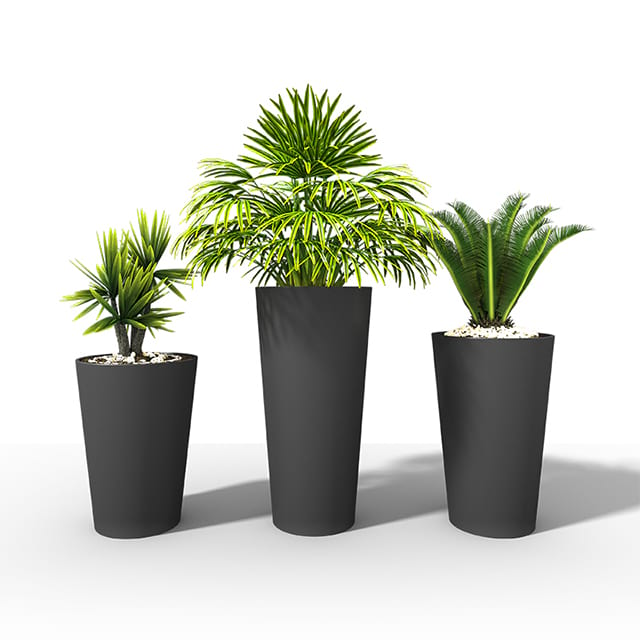
Heavy commercial Garden Planters function as modular architecture. They solve spatial dilemmas beautifully. You can easily reposition them as needs change. They scale perfectly alongside your business.
These units create immediate physical boundaries. You can separate a dining patio from a busy sidewalk. They soften the surrounding industrial aesthetic. Plants absorb ambient noise efficiently. Your patrons enjoy a better atmosphere.
We must maintain realistic expectations regarding security. These vessels provide effective psychological barriers. They establish clear physical boundaries for pedestrians. However, they are not structurally engineered security bollards. Never substitute them for crash-rated barriers in high-speed vehicle zones. They guide foot traffic; they do not stop cars.
Best Practices for Zoning: Space your containers no more than 18 inches apart. This prevents pedestrian flow-through. Choose taller plants to maximize noise deflection. Ensure foliage does not obstruct vehicle sightlines at intersections.
Cheap retail pots crack quickly under freeze-thaw cycles. They fade rapidly under intense UV exposure. Flimsy plastics warp during peak summer heat. This degradation ruins your brand image. Commercial properties look neglected when containers fail.
Investing in commercial-grade materials solves this issue. Manufacturers design these vessels for weather extremes. They withstand blistering heat and freezing temperatures. You must evaluate materials based on your specific regional climate.
Corten steel offers an industrial aesthetic. It develops a protective rust patina naturally. This patina prevents deeper structural corrosion. However, rust runoff can stain underlying concrete. You must seal the concrete or place drip trays underneath.
Fiberglass provides a high strength-to-weight ratio. It handles freezing temperatures beautifully. Manufacturers apply UV-resistant finishes to prevent long-term chalking. This material suits almost any environment. Wood offers high aesthetic appeal. It requires regular sealing to prevent rot. Wood demands higher ongoing maintenance.
Material Durability Comparison Chart
Material Type | Weather Resistance | Maintenance Level | Best Use Case |
|---|---|---|---|
Corten Steel | Extremely High | Low | Industrial commercial patios |
Marine-Grade Fiberglass | High | Very Low | Weight-restricted rooftops |
Natural Wood | Moderate | High | Residential organic gardens |
Selecting the ideal modular system requires a structured approach. Start by defining your primary success criteria. Are you prioritizing mobility? Do you need maximum aesthetic impact? Are you focused on agricultural yield? Your primary goal dictates your material choices.
Next, match the material to your specific environment. High pedestrian traffic areas face daily abuse. They require scratch-resistant, heavy materials. Rooftops demand a completely different approach. They require lightweight, UV-stable materials. You must also secure rooftop units against high winds.
Volume and sizing dictate plant health. Ensure the internal volume accommodates your chosen plants. Mature root balls need adequate space. Cramped roots lead to root-binding. This condition eventually causes plant loss. Deeper vessels support small trees. Shallow units only support succulents or small annuals. Sizing appropriately guarantees better Garden Planters performance.
Next-Step Actions:
Audit your site’s daily sun exposure accurately.
Measure your physical footprint constraints using painter's tape.
Calculate acceptable weight loads for elevated spaces.
Request material color samples before placing large commercial orders.
Modular planting solutions are much more than decorative vessels. They function as highly effective architectural tools. They solve specific landscaping challenges immediately. They bypass poor agronomic conditions entirely. Both residential and commercial properties benefit from their integration.
You should shift your focus toward long-term value. Evaluate options based on material lifespan. Prioritize systems offering significant maintenance reduction. Consider their overall spatial utility above mere aesthetics. Proper material selection prevents premature cracking and fading.
Review your site dimensions carefully.
Assess your structural weight limits before purchasing.
Consult a landscape designer to match materials to your climate.
Establish a clear drainage plan to protect hardscape surfaces.
A: It depends on the material and plant type. Commercial-grade fiberglass and Corten steel can withstand freeze-thaw cycles, provided there is adequate drainage so expanding ice doesn't crack the walls. However, soil may need to be insulated or emptied depending on the hardiness zone of your plants.
A: Utilize planters featuring channeled drainage underneath, paired with riser feet or catch trays. For systems lacking trays, integrating a French drain system or directing runoff into established landscape beds is critical.
A: "Cost-effective" must account for lifespan. While heavy-duty plastics have a lower upfront cost, commercial-grade fiberglass often delivers the best ROI over a 10-year period due to its resistance to cracking, UV degradation, and low maintenance requirements.


