
English 
T: +86-139-2641-8287
No.51, Chuangye Road, Taiping Town, Conghua District, Guangzhou City, Guangdong Province, China


Views: 0 Author: Site Editor Publish Time: 2026-07-01 Origin: Site


Sourcing outdoor planters requires balancing aesthetic goals against harsh environmental realities. Constant UV exposure, relentless freeze-thaw cycles, and heavy wind routinely test your garden investments. You cannot ignore these elements. Purchasing based solely on appearance often leads to cracked materials or badly faded finishes after a single season. Furthermore, inadequate drainage frequently causes root rot. This hidden danger quickly ruins expensive plants and frustrates even experienced gardeners.
We want to solve these common landscaping failures. Our goal is to provide a structured framework for evaluating Outdoor Planters based on climate suitability, spatial constraints, and budget allocations. By following these guidelines, you ensure a high-ROI purchase lasting multiple seasons. You will learn exactly how to match material durability to your specific weather patterns. We also guide you through proper sizing and essential drainage setups to guarantee your plants thrive year-round.
Material dictates lifespan: Your local climate (specifically frost cycles and peak summer UV) should be the primary filter for choosing materials like fiberglass, resin, terracotta, or concrete.
Drainage is non-negotiable: Outdoor planters require pre-drilled holes or drillable bases to prevent waterlogging during heavy rainfall.
Size impacts infrastructure: Large outdoor planters require significant soil volume, drastically increasing weight. Structural load limits must be assessed for balconies and decks.
Price aligns with durability: Budget-friendly plastics work for seasonal or shaded use, while commercial-grade fiberglass and concrete are necessary investments for permanent, year-round exposure.
Selecting the right container goes beyond picking a favorite color. You must evaluate environmental stressors before making a decision. Assessing these core criteria ensures your plants remain healthy and your property remains safe from structural damage.
Different materials handle thermal shock in wildly different ways. You must evaluate your regional weather extremes. Sun-drenched southern patios demand UV-stabilized finishes. Without UV protection, synthetic materials quickly become brittle and lose their color. Conversely, northern climates experience brutal freeze-thaw cycles. Water expands as it freezes. If moisture seeps into porous container walls, the resulting ice expansion shatters the pot. Therefore, frost-resistant compositions are vital for cold environments.
A lack of proper drainage remains the leading cause of outdoor plant failure. Evaluate whether your chosen container offers built-in drainage holes or a self-watering reservoir. Open drainage allows excess rainfall to escape freely. This prevents soggy soil from suffocating plant roots. Self-watering systems work well in covered outdoor spaces, but they can overflow if exposed to heavy, continuous rain. Always prioritize containers offering easily drillable bases if pre-drilled holes are missing.
You must balance wind resistance against structural load limits. High-rise apartment balconies and aging wooden decks have strict weight capacities. Wet soil weighs significantly more than dry soil. Adding heavy stone containers to an elevated deck often exceeds safe structural limits. In these elevated spaces, lightweight materials become necessary. However, ground-level patios facing strong crosswinds require heavy bases. Wind easily topples tall, lightweight containers, damaging plants and surrounding property.
Eco-conscious consumers should factor in the complete lifecycle of the planter. Look at the manufacturing process and disposal options. Many manufacturers now utilize recycled composites. These materials divert plastics from landfills while offering excellent durability. Natural, biodegradable options also exist for temporary installations. Assess how long the item will last and whether you can recycle it at the end of its functional life.
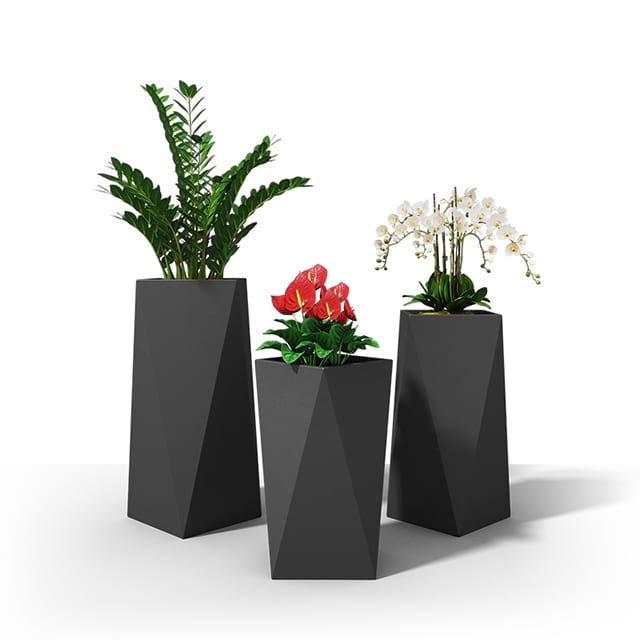
Material selection directly dictates both lifespan and aesthetic appeal. No single material works perfectly for every scenario. You must match the material's inherent strengths to your specific environmental challenges.
Material Category | Primary Advantage | Main Drawback | Best Used For |
|---|---|---|---|
Fiberglass & High-Density Resin | Lightweight and highly frost-resistant | Higher initial price point | Modern aesthetics, year-round use |
Terracotta & Glazed Ceramic | Excellent porosity for root health | Prone to cracking in winter | Warm climates, drought-tolerant plants |
Concrete & Cast Stone | Maximum durability and wind resistance | Extremely heavy to move | Commercial properties, permanent fixtures |
Wood & Metal | Unique architectural textures | Requires ongoing maintenance/insulation | Custom garden boxes, industrial designs |
Modern manufacturing makes fiberglass and high-density resin top contenders. These options are exceptionally lightweight. They resist UV fading and easily survive aggressive frost cracking. Manufacturers often mold them to mimic heavy materials like stone or cast iron. While commercial-grade fiberglass requires a higher initial price point, its longevity justifies the expense. They are best for large-scale installations, modern design schemes, and permanent year-round outdoor use.
Traditional terracotta provides a classic aesthetic. These pots are highly porous. Porous walls pull moisture away from the soil, offering excellent protection against overwatering. They remain affordable at smaller sizes. However, terracotta acts like a sponge. It absorbs water, which then freezes and expands during winter. This makes them highly prone to cracking in freeze-thaw cycles. They are also incredibly heavy when fully saturated. Reserve these for warm climates, Mediterranean styling, and drought-tolerant plant species.
Concrete delivers maximum durability. These heavy containers act as natural theft deterrents in public spaces. They offer unparalleled wind resistance for top-heavy trees. The primary drawback is their immense weight. Moving them requires heavy machinery or a dedicated team. Furthermore, concrete absorbs and retains thermal energy. During peak summer heat, hot container walls can bake delicate root systems. They excel in ground-level commercial properties and permanent landscape architecture projects.
Wood and metal introduce unique architectural textures into a garden space. Corten steel intentionally develops a protective rust patina over time. Cedar and teak naturally resist insects. However, wood requires regular sealing to prevent gradual rot. Metal containers heat up rapidly under direct sunlight. Without proper interior insulation liners, metal walls easily scorch soil and roots. Choose these materials for custom-built garden boxes or specific industrial landscape designs.
Choosing the correct dimensions impacts both visual harmony and biological health. Oversized containers dwarf small patios. Undersized containers restrict root growth and cause plants to become root-bound.
You need strict guidelines for matching container height and width to your space. Place tall, slender Outdoor Planters near entryways to frame doors without blocking walkways. Wide, low bowl designs work better on retaining walls or as patio centerpieces. A general design rule suggests the container should represent about one-third of the total height of the final plant-and-pot combination. This ratio prevents the display from overwhelming your available space.
Different plants require vastly different soil depths. You must calculate necessary soil volume based on your intended plant type. Failing to provide adequate room stresses the plant and stunts growth.
Annuals and Bedding Plants: These feature shallow root systems. They typically only need 6 to 8 inches of soil depth to thrive.
Perennials and Small Shrubs: These require moderate space. Aim for 12 to 18 inches of depth to accommodate expanding root networks over multiple years.
Small Trees and Large Evergreens: Deep taproots demand significant vertical space. Provide a minimum of 24 to 36 inches of soil depth to ensure long-term stability and health.
Managing the massive internal volume of oversized pots presents unique challenges. Filling a massive container entirely with potting soil costs a small fortune. It also makes the final product too heavy to move. Instead, utilize clever filler strategies. Place lightweight, non-biodegradable fillers at the base. Many professionals use empty, sealed plastic jugs or closed-cell foam blocks securely tied inside mesh bags. This technique creates a false bottom. It drastically reduces soil cost and total weight while still providing adequate space for shallow-rooted plants.
Your budget should directly reflect your intended use case. Throwing money at a temporary staging project wastes resources. Conversely, cutting corners on permanent architectural fixtures guarantees future replacement headaches.
You can confidently opt for budget-friendly resin or standard recycled plastics in specific situations. Seasonal container gardens rarely need decade-long durability. Shaded areas protect cheap plastics from aggressive UV degradation. Rapidly rotating seasonal displays also benefit from low-cost options. If you plan to change your patio aesthetic every spring, expensive stone vessels restrict your flexibility. Choose budget options when the risk of weather damage remains low.
While cheap plastic looks great on the store shelf, you must understand how it degrades. Thin, untreated plastics react poorly to outdoor environments. Ultraviolet light breaks down the polymer chains within weeks. The material becomes highly brittle. A slight bump from a lawnmower or a strong gust of wind shatters the compromised plastic. Consequently, you often replace these cheap items within one or two seasons. This rapid replacement cycle severely lowers your long-term return on investment.
You easily justify the higher cost of commercial-grade items under tough conditions. Permanent fixtures demand premium materials. Exposed winter environments destroy cheap pots overnight. Large statement trees require immense stability and root protection. Repotting a mature, 200-pound tree because the cheap container cracked is prohibitively difficult and dangerous. Investing in thick fiberglass or cast stone upfront prevents disastrous failures later.
Even the highest-quality container fails if you set it up incorrectly. Proper implementation safeguards your plants and your property.
You must ensure drainage holes remain completely unobstructed. Many older gardening guides recommend placing a layer of gravel at the bottom to improve drainage. This is a common and dangerous mistake. Gravel actually raises the water table inside the pot. Moisture suspends directly above the gravel line, soaking the delicate lower roots. Instead of gravel, place a simple piece of breathable landscape fabric or mesh screen directly over the drainage hole. This keeps soil inside the pot while allowing water to flow out freely.
People routinely underestimate the weight of saturated soil. A standard cubic foot of wet potting soil easily weighs 40 to 50 pounds. Filling multiple large Outdoor Planters creates extreme structural risks. Overloading older wooden decks or standard apartment balconies leads to catastrophic structural failure. Always calculate the final wet weight of your containers. Consult your building manager or a structural engineer if you plan to install massive concrete or fully loaded fiberglass vessels on elevated platforms.
Surviving winter requires proactive preparation. Overwintering practices extend the life of your containers significantly. Follow these best practices:
Elevate the base: Place pots on rubber feet or bricks. This prevents the base from freezing solidly to patio concrete and blocking drainage.
Empty vulnerable materials: Clean out terracotta and thin ceramic pots before the first hard freeze. Store them in a dry garage or basement.
Wrap permanent fixtures: Use burlap or specialized insulated wraps around large containers left outside. This insulates the soil mass and protects dormant roots from extreme temperature drops.
Selecting the best container requires methodical planning. Do not let exciting design aesthetics distract you from practical environmental realities. Follow a strict shortlisting logic to finalize your purchase.
Assess Winter Compatibility: Eliminate materials prone to frost-cracking if you live in a cold zone.
Check Size and Weight Limitations: Verify the structural load capacity of your deck or balcony.
Determine Desired Aesthetic: Match the surviving material options to your home's exterior design.
Allocate Budget: Decide if this is a seasonal rotating display or a permanent architectural investment.
Your immediate next steps involve taking accurate measurements. Measure your intended footprint. Verify the structural load of your placement area. Finally, confirm the specific root depth requirements of your chosen plants before completing your purchase.
A: Yes. Without them, heavy rain will drown the root system. If a planter lacks holes, it must be drilled immediately. Alternatively, you can use it strictly as a decorative cachepot by placing a slightly smaller, draining pot directly inside it.
A: Use a heavier base material like concrete or cast stone in windy areas. If you prefer lightweight fiberglass, place heavy stones or bricks at the very bottom of the container before adding any soil. This lowers the center of gravity securely.
A: High-density, frost-resistant resin handles winter weather perfectly. However, thin, cheap plastics will rapidly become brittle. They routinely shatter in freezing temperatures when expanding ice exerts pressure on the weakened walls.
A: Fill the bottom 25-30% of the planter with lightweight, inert materials. Empty plastic jugs or closed-cell foam packing peanuts placed inside a mesh bag work wonderfully. Do this before adding potting soil, provided the plant's root system does not require that extra depth.


