
English 
T: +86-139-2641-8287
No.51, Chuangye Road, Taiping Town, Conghua District, Guangzhou City, Guangdong Province, China


Views: 0 Author: Site Editor Publish Time: 2026-07-04 Origin: Site


Upgrading your landscape design often involves introducing oversized architectural vessels. This choice transforms both residential and commercial spaces instantly. However, it shifts your purchase from a simple decor update into a serious structural investment. These massive containers introduce high-stakes variables you absolutely cannot ignore.
Buyers frequently face excessive deck weight limits and complex drainage requirements. Unpredictable microclimates also threaten plant survival. Furthermore, expensive materials carry a huge risk of cracking during winter freezes if chosen poorly. You need a reliable strategy.
This guide provides an evidence-based framework for evaluating, shortlisting, and installing these landscape features. You will learn how to select Outdoor Planters designed to actively protect your plants and property. By mastering load constraints, drainage science, and spatial scale, you can maximize your landscape return on investment.
Material dictates lifespan and placement: Fiberglass and high-density resin offer the best strength-to-weight ratio for decks, while concrete and metal suit ground-level permanent installations.
The "gravel at the bottom" drainage rule is a myth for large containers; structural fillers or 100% quality potting soil are required to prevent perched water tables.
True winterization requires frost-proof materials and elevated placement to prevent drainage holes from freezing shut.
Proper sizing must account for both the mature root ball of the plant and the visual scale of the surrounding architecture.
A single 36-inch planter holds immense volume. When filled, wet soil easily exceeds 300 pounds. You must start every evaluation by calculating load-bearing constraints. Concrete patios handle extreme mass effortlessly. Balconies and older wooden decks demand strict weight management. Standard residential balconies often support only 50 to 100 pounds per square foot. Exceeding these limits creates severe structural hazards.
You also cannot ignore the microclimate factor. Massive soil volumes retain heat differently than small nursery pots. Dark metal containers bake tender roots sitting under full summer sun. Porous materials dry out rapidly on windy rooftops. You must match the material thermal properties to your specific environmental exposure.
A successful purchase requires balancing multiple elements. You need visual scale alongside structural integrity. You must prioritize root health through proper insulation and drainage. Finally, you want a positive cost-to-lifespan ratio. Smart buyers evaluate the entire ecosystem before finalizing a vessel.
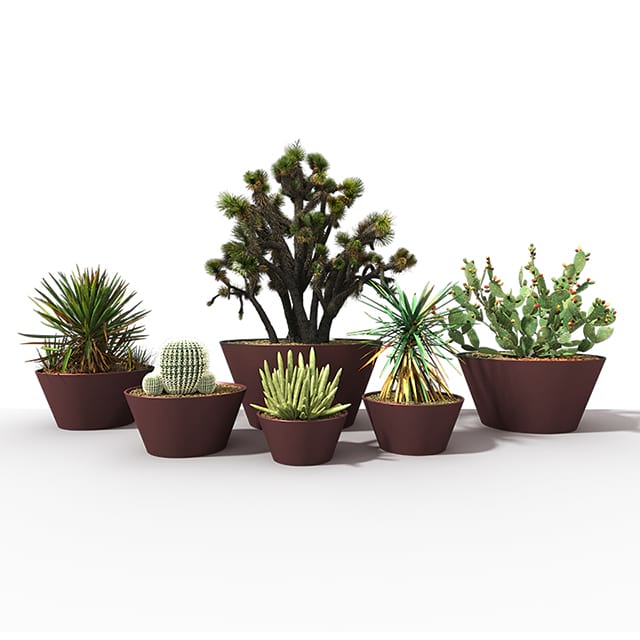
Material Choice Comparison Chart
Material | Weight Profile | Durability | Best Application |
|---|---|---|---|
Fiberglass | Ultra-Lightweight | High (UV Resistant) | Rooftops, Balconies, Commercial |
High-Density Resin | Lightweight | Moderate-High | High-Volume Residential |
Concrete | Extreme Heavy | Very High | Ground-level Permanent |
Corten Steel | Heavy | Extreme | Architectural Focal Points |
Terracotta | Moderate | Low (Freeze Risk) | Arid, Frost-Free Climates |
Fiberglass stands as the industry standard for commercial rooftops and balconies. These lightweight structures offer commercial-grade durability. They resist UV degradation beautifully while offering modern finishes. You will face a higher upfront cost. Cheaper fiberglass blends can become brittle over time. Always specify commercial-grade thickness.
High-Density resin provides a highly maneuverable, budget-friendly alternative. These plastics offer excellent moisture retention for thirsty plants. However, resin remains vulnerable to fading. Intense UV exposure causes warping if the manufacturer skips protective treatments. We consider resin the best choice for cost-conscious, high-volume residential projects.
Concrete and cast stone deliver unmatched durability. They offer extreme wind resistance and a classic aesthetic. The downside remains their massive weight. Installation requires specialized delivery teams. Concrete's porous nature risks freeze-thaw cracking if you fail to seal the exterior properly. Reserve concrete for permanent ground-level security.
Corten steel and aluminum provide extreme longevity. Corten develops a unique, self-protecting rust patina. Metal carries zero cracking risk during winter. However, high thermal conductivity poses a major threat. Metal transfers extreme heat and cold directly into the soil. You must install interior foam insulation to protect delicate root systems.
Terracotta and ceramic containers celebrate a traditional aesthetic. They offer excellent breathability for arid plants like cacti. Unfortunately, they present a high likelihood of shattering in freezing climates. Moisture absorbs into the porous clay. When temperatures drop, expanding ice destroys the vessel. Keep terracotta indoors during harsh winters.
Choosing the correct size involves a two-part evaluation. You must satisfy both horticultural needs and architectural demands.
Follow these structured horticultural sizing steps:
Measure the root ball: Note the exact diameter of your current nursery pot.
Calculate the growth allowance: Choose a vessel 2 to 4 inches wider for standard plants.
Adjust for fast growers: Select containers up to 6 to 8 inches wider for vigorous trees and shrubs.
Evaluate depth requirements: Use shallow bowls for succulents and annuals. Specify deep cylinders for taproot trees.
Architectural scale requires a different perspective. Oversized vessels must proportion correctly alongside entryways and architectural columns. Buyers commonly purchase undersized containers. Small pots look clustered and visually cluttered in large outdoor spaces. We recommend mapping the physical footprint first. Cut a piece of cardboard to match the exact dimensions. Place it in your intended location before purchasing.
Mastering visual proportioning relies on the "Rule of Thirds." This classic container design principle guarantees visual balance. The vessel itself should represent one-third of the total height. The mature plant occupies the remaining two-thirds. This ratio grounds the arrangement beautifully.
Solving the drainage problem separates successful plantings from rotting failures. You must confirm pre-drilled holes exist. If not, verify the structural safety of drilling your own. Fiberglass drills easily. Ceramic shatters under incorrect bit pressure.
We must debunk the persistent gravel myth. Adding a layer of gravel creates a "perched water table." Fluid dynamics prevent water from moving easily between fine soil and coarse rocks. Capillary action holds water directly above the gravel line. This drowns the lowest roots. Always use cohesive 100% potting soil columns from top to bottom.
Managing soil volume requires strategic void fillers. Extra-deep vessels do not need soil all the way down. Unnecessary soil adds massive, useless weight. You need strategies to fill empty space safely. Place closed-cell foam blocks in the bottom third. You can also stack inverted plastic nursery pots. Commercial lightweight fillers provide an excellent structural base.
Winterization demands strict protocols. You must elevate your vessels using specialized pot feet. Elevating prevents drainage holes from freezing solidly against the patio surface. Blocked holes trap autumn rain. Subsequent freezes expand the trapped ice, shattering the container. Identify porous materials early. You must empty and store terracotta indoors. You can leave fiberglass and insulated metal outside year-round.
Strategic budget allocation prevents wasted landscaping funds. Focus your high-end budget on permanent entryway flanking. Commercial spaces demand premium materials. Load-restricted balconies also mandate premium purchases. Lightweight fiberglass is practically mandatory for high-rise safety. You should view these specific placements as permanent architectural upgrades.
You can easily save money in lower-impact zones. Utilize high-quality resin for backyard patios. Seasonal holiday displays do not require permanent stone. Large property borders benefit greatly from cost-effective composite rows. Mixing premium Outdoor Planters near doorways and budget options further out balances your overall project spend.
We must address community-driven desires for "cheap" alternatives. Reddit gardening forums frequently suggest repurposed agricultural troughs. Many users recommend DIY wooden builds. These are entirely valid budget options. However, you must understand their specific tradeoffs. Galvanized troughs rust over time. Untreated wood rots quickly. Chemically treated wood leaches toxic compounds into surrounding soil. Never use treated wood for edible garden beds.
Take direct action before finalizing your cart. Measure your exact physical footprint. Calculate the strict load limit of your balcony or deck surface. Finally, verify your chosen plant's mature root depth. Careful preparation guarantees long-term horticultural success.
Buying oversized containers requires balancing structural engineering realities against aesthetic design desires.
Prioritize material selection based on your specific local climate and placement surface over pure visual appeal.
Never use gravel for drainage; use continuous soil or structural foam to prevent perched water tables.
Always elevate your containers during winter to prevent ice blockages and subsequent cracking.
Your landscape investment deserves careful planning. Do not rush the sizing process. Grab a tape measure and map your space today. We encourage you to browse specialized inventory categorized by material and size to find your perfect match.
A: Fiberglass, high-density resin, and internally insulated metal perform best in freezing conditions. These non-porous materials resist freeze-thaw expansion. You must absolutely avoid terracotta or unsealed concrete, as they absorb moisture and will shatter when temperatures drop.
A: No. Fluid dynamics and capillary action dictate water will not drain easily from fine soil into coarse rocks. This creates a "perched water table" that drowns roots. Use a continuous soil column or closed-cell structural foam instead.
A: Create a false bottom to fill the empty void. You can use structural closed-cell foam blocks, crushed aluminum cans, or sturdy inverted plastic nursery pots in the bottom third. Cover these lightweight fillers with landscape fabric before adding soil.
A: You can expect a realistic lifespan of 5 to 10 years. Longevity depends entirely on UV exposure and the specific resin density. High-grade, UV-treated polyethylene resists fading and cracking significantly longer than cheaper plastic alternatives.


