
English 
T: +86-139-2641-8287
No.51, Chuangye Road, Taiping Town, Conghua District, Guangzhou City, Guangdong Province, China


Views: 0 Author: Site Editor Publish Time: 2026-07-14 Origin: Site


Purchasing garden planters requires more than a simple aesthetic choice. It acts as an infrastructural investment in your plant health. It improves property aesthetics and reduces your daily maintenance. Selecting the wrong container often leads to devastating root rot. You might also face frost-cracked materials and premature replacement costs. You need reliable vessels to support delicate root systems across changing seasons. This guide provides an evidence-based evaluation framework. We will help you select the ideal Garden Planters based on material longevity. We also evaluate specific biological needs and environmental constraints. You will discover how to match volumetric sizing to a plant's ultimate maturity. We explore why drainage systems dictate long-term horticultural success. By the end, you will confidently navigate these structural choices. You will make an informed decision for your outdoor or indoor space.
Material dictates maintenance: Porous materials (terracotta) require more watering; synthetic composites (fiberglass, resin) retain moisture and resist weathering.
Drainage is non-negotiable: Without adequate drainage holes or staging systems, containers become waterlogged, leading to inevitable plant failure.
Size for maturity, not just nursery scale: Factor in a 1-to-2-inch diameter increase for immediate repotting, allowing for future root expansion.
Weight impacts logistics: The combined weight of the planter, saturated soil, and mature plant must align with structural limits (e.g., balconies) and seasonal mobility needs.
Climate dictates durability: Frost cycles and intense UV exposure will degrade improper materials rapidly; prioritize winter-proof or UV-treated options for year-round outdoor use.
You must carefully assess how different materials interact with water. This dynamic directly affects your watering schedule and overall root health. Material porosity dictates the rate of moisture evaporation. We divide materials into two main categories: porous and non-porous.
Porous options include terracotta and unglazed clay. These materials allow water and air to move freely through the container walls. They provide excellent airflow to the root zone. This makes them perfect for drought-tolerant plants like succulents and Mediterranean herbs. However, they dry out quickly. You must commit to frequent watering during hot summer months.
Non-porous options include plastic, glazed ceramic, and metal. These containers trap moisture inside the soil profile. They boast high moisture retention. They work perfectly for water-loving tropical plants and thirsty vegetables. Yet, they require strict drainage management to prevent stagnant water from suffocating the roots.
Material Moisture Interaction Chart
Material Type | Porosity Level | Best Suited For | Watering Frequency |
|---|---|---|---|
Terracotta | High | Cacti, Lavender, Rosemary | Frequent |
Glazed Ceramic | Low | Ferns, Calatheas, Hostas | Moderate |
Fiberglass / Resin | None | Trees, Large Shrubs, Annuals | Low to Moderate |
Performance and durability vary wildly across different compositions. Cedar and redwood offer a beautiful natural aesthetic. Wood effectively insulates roots against sudden temperature shifts. Still, wood remains vulnerable to eventual rot unless you use internal plastic liners.
Composites and fiberglass deliver commercial-grade durability. They remain lightweight and highly weather-resistant. Landscapers frequently choose them for high-traffic areas or large-scale installations. They do not warp or degrade easily.
You must also watch out for implementation risks. Unverified galvanized steel planters can leach heavy metals into the soil. You should strictly avoid planting edible crops in raw metal containers. Always line them with a food-safe barrier first.
Volumetric sizing determines the long-term success of your horticultural efforts. The chosen vessel must comfortably support the plant's mature root system. It must also provide adequate physical stability against wind load, especially for tall canopies like indoor trees.
We use a simple sizing framework to ensure optimal growth. As a general rule of thumb, upgrade the diameter by one to two inches for small plants. For large floor plants or outdoor shrubs, upgrade by two to four inches. This provides just enough room for fresh root expansion without overwhelming the plant.
Deep vessels: Essential for taproots. Trees, tomatoes, and roses require deep soil profiles to anchor themselves.
Wide, shallow bowls: Ideal for shallow-rooting species. Succulents, lettuces, and microgreens thrive in broader, low-profile containers.
Pot Sizing Guide
Current Nursery Pot | Recommended Upgrade Size | Target Plant Type |
|---|---|---|
4-inch pot | 5 to 6-inch pot | Small herbs, tabletop succulents |
10-inch pot | 12 to 14-inch pot | Ficus, Monstera, large tropicals |
5-gallon bucket | 7 to 10-gallon container | Patio fruit trees, large shrubs |
Avoid the severe implementation risk known as "over-potting." You might feel tempted to place a tiny plant directly into a massive pot. This creates a dangerous imbalance. The small root system cannot absorb the vast amount of moisture held in the surrounding soil. This excess damp soil quickly becomes anaerobic. It significantly increases the risk of fungal infections and rapid root rot.
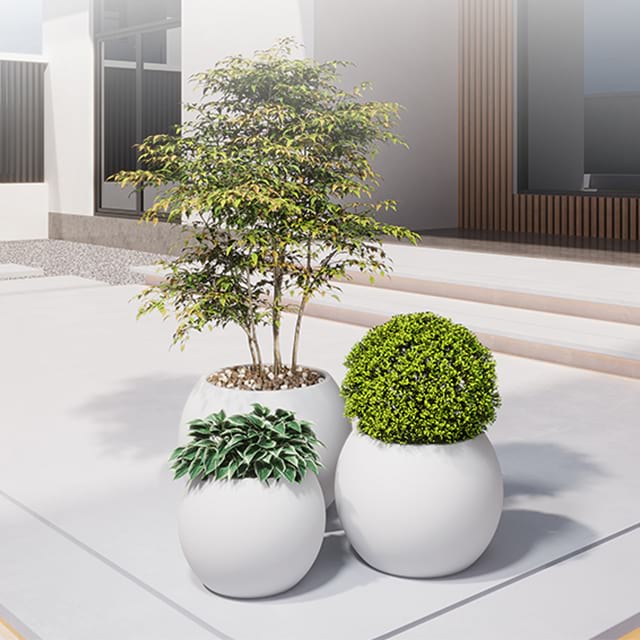
Proper drainage serves as your primary defense against waterlogging. Root health depends entirely on a balanced ratio of oxygen and water. Without drainage, water displaces oxygen in the soil. The roots will suffocate and die.
Always verify drainage features before finalizing a purchase. Confirm the presence of pre-drilled holes at the base. If holes are absent, the vessel is likely styled as a "cachepot" for decorative drop-in use. If you plan to plant directly into it, verify if you can safely drill the material.
Drilling plastic or high-density resin requires standard tools and minimal effort. Drilling ceramic, concrete, or terracotta requires specialized masonry bits. You must go slowly to prevent the material from shattering.
We see three primary system approaches for managing drainage:
Direct planting: You place soil and plants directly into the vessel. This strictly requires integrated drainage holes. You will also need a waterproof saucer to protect your flooring from runoff.
Double-potting (Drop-in method): You keep the plant in its original plastic nursery pot. You rest this nursery pot inside a decorative, solid container. You can easily remove the inner pot for watering in a sink.
Self-watering systems: These utilize sub-irrigation reservoirs located at the base. They deliver water upward through capillary action. They run highly efficiently but require monitoring. You must ensure the reservoir does not become stagnant over time.
You must ensure the final installation remains safe for your environment. It also needs to remain manageable for you. A beautiful installation means nothing if it collapses your balcony or injures your back during a seasonal move.
Consider the necessary weight calculations carefully. Saturated potting soil weighs approximately 70 to 100 pounds per cubic foot. When you combine this wet soil with a heavy concrete or thick ceramic vessel, the total mass skyrockets. The total weight can easily exceed safe structural limits for older wooden decks. It also poses risks for high-rise apartment balconies.
We recommend several logistical solutions to mitigate weight issues. First, specify fiberglass or high-density resin for large statement pieces. These modern materials drastically reduce the base weight without sacrificing visual impact. This makes them excellent Garden Planters for elevated spaces.
Second, plan for mobility before you add soil. Incorporate heavy-duty rolling caddies under the vessel before filling it. This becomes essential if you require seasonal relocation. Moving a massive citrus tree indoors before the first winter frost becomes impossible without a pre-installed rolling base.
You must match your planter's engineering to your local USDA hardiness zone and microclimate. Different materials react drastically to temperature extremes and sunlight exposure. Failing to account for local weather leads to rapid degradation.
Temperature extremes test the physical limits of your containers. Freeze and thaw cycles pose the greatest threat. Porous clay, terracotta, and cheap plastics remain highly susceptible to cracking. When moisture seeps into porous walls and freezes, it expands. This expansion causes immediate frost heave and structural shattering. You must choose frost-resistant fiberglass, solid concrete, or thick polyethylene for freezing winter climates.
Heat insulation also plays a vital role. Dark-colored metal or thin plastic containers absorb massive amounts of solar radiation. They can literally bake roots in direct summer sun. Wood and thick ceramic offer superior thermal insulation. They keep the root zone cooler during intense heat waves.
UV resistance ensures long-term aesthetic survival. Intense ultraviolet rays break down molecular bonds in cheap plastics. Ensure your synthetic vessels explicitly state they contain UV stabilization treatments. This prevents structural brittleness and severe color fading over consecutive sunny summers.
A smart decision framework balances the upfront price against the expected functional lifespan. While cheap options seem tempting, they often fail quickly. Investing in durable materials usually lowers your long-term replacement expenses.
We break down this tiered cost analysis into three categories:
Budget Tier (Injection-molded plastic): These present a very low upfront cost. However, you should expect a brief one to three-year lifespan. Sun exposure quickly causes UV degradation. They become brittle and crack under minor pressure.
Mid-Range Tier (Terracotta, standard glazed ceramic, wood): These feature a moderate cost. They offer a three to seven-year lifespan. Their longevity depends entirely on your winter care routine and seasonal maintenance. You must often move them indoors to prevent frost damage.
Investment and Commercial Tier (Fiberglass, Corten steel, high-density resin): These require a high initial cost. Yet, they yield a robust lifespan exceeding ten years. They feature zero winter storage requirements. They sit outside year-round without degrading.
Your shortlisting logic should follow the project scale. For permanent landscape architecture, default strictly to investment-grade composites or metals. You want installations to last decades. For seasonal annuals or temporary real estate staging, mid-range ceramics or durable plastics suffice perfectly.
Selecting the ideal containers requires balancing biological necessity with physical constraints. You must align drainage capabilities, proper volumetric sizing, and material porosity with your specific plant species. Simultaneously, you must account for your local climate, structural weight limits, and budget restrictions.
Take direct action before making a purchase. Audit your planting location today. Measure the spatial footprint, check sunlight exposure, and verify structural weight limits. Identify the exact plant species you intend to grow to determine required root depth.
Ready to upgrade your outdoor landscape or indoor sanctuary? Browse our complete collection of durable, weather-resistant vessels to find the perfect match for your botanical needs.
A: Generally, no. Indoor planters often lack proper drainage holes. They also miss crucial UV and frost resistance treatments. Using indoor-specific cachepots outdoors usually results in flooded plants. The materials will quickly fade, become brittle, or crack during the first winter freeze.
A: Yes. The "rocks at the bottom" method is a persistent horticultural myth. It actually creates a perched water table. This moves the saturated, soggy soil closer to the plant’s delicate roots. True drainage holes remain absolutely mandatory for long-term outdoor planter health.
A: For non-frost-proof materials like terracotta, empty all soil before the first freeze. Scrub the interior with a mild 10% bleach solution to kill lingering pathogens. Dry the vessel completely. Store it upside down in a protected shed or garage to prevent freeze-thaw cracking.
A: Choose untreated cedar, food-grade high-density polyethylene (HDPE), or breathable fabric grow bags. These materials remain incredibly safe for edible crops. Always avoid chemically pressure-treated woods or unverified cheap plastics. They may leach harmful toxins and heavy metals into your food supply over time.


