
English 
T: +86-139-2641-8287
No.51, Chuangye Road, Taiping Town, Conghua District, Guangzhou City, Guangdong Province, China


Views: 0 Author: Site Editor Publish Time: 2026-03-24 Origin: Site


Choosing the correct depth for a Planter Box is one of the most important decisions in successful container gardening. Whether you are managing a small balcony garden, operating an urban farm planting project, or supporting agricultural cooperative large-scale planting, the depth of your Planter Box directly affects plant health, root expansion, water retention, and overall yield.
A well-designed Planter Box is more than just a container. It is a controlled micro-environment that supports agricultural ecology, root development, and sustainable food production. In recent years, innovations such as the (Polyurethane) Agricultural Planting Box, water-saving type containers, and breathable and drainable systems have reshaped protected agricultural planting and vegetable and fruit greenhouse cultivation worldwide.
In this comprehensive guide, we will explore exactly how deep a Planter Box should be, analyze depth requirements by vegetable type, compare container designs, and examine modern trends such as integrated planting and agricultural seedling bases (seedling cultivation).
The depth of a Planter Box determines how well a plant’s root system can grow, access nutrients, and retain moisture. Insufficient depth restricts root expansion, reduces oxygen exchange, and increases stress, while excessive depth may waste soil, water, and space.
A properly sized Planter Box ensures optimal Root System Protection. Roots require space to:
Spread laterally
Grow vertically
Access oxygen
Store nutrients
Maintain moisture balance
When a Planter Box is too shallow, roots become crowded, leading to:
Stunted growth
Poor fruit production
Increased susceptibility to disease
Water stress
Deep-rooted vegetables such as tomatoes or carrots require significantly deeper Planter Box dimensions than leafy greens.
Modern Planter Box systems often include Breathable and drainable designs. Proper depth allows for:
Even moisture distribution
Prevention of waterlogging
Reduced risk of root rot
Efficient drainage layers
A shallow Planter Box dries out quickly, especially in hot climates. In contrast, deeper boxes maintain consistent moisture levels—particularly important in vegetable and fruit greenhouse cultivation.
In agricultural ecology, the Planter Box acts as a controlled ecosystem. Depth influences:
Soil microbial activity
Organic matter breakdown
Nutrient cycling
Soil temperature regulation
When depth is adequate, soil layers can be structured strategically:
| Soil Layer | Function | Recommended Thickness |
|---|---|---|
| Drainage Layer | Prevent waterlogging | 1–2 inches |
| Nutrient Soil | Main growing medium | 8–24 inches (depending on crop) |
| Mulch Layer | Moisture retention | 1–2 inches |
A well-structured Planter Box supports integrated planting systems where multiple crops grow harmoniously.
With the growth of urban farm planting and agricultural cooperative large-scale planting, the depth of a Planter Box impacts:
Yield per square meter
Water consumption
Labor efficiency
Space optimization
In high-density environments, selecting the correct Planter Box depth maximizes production while minimizing cost.
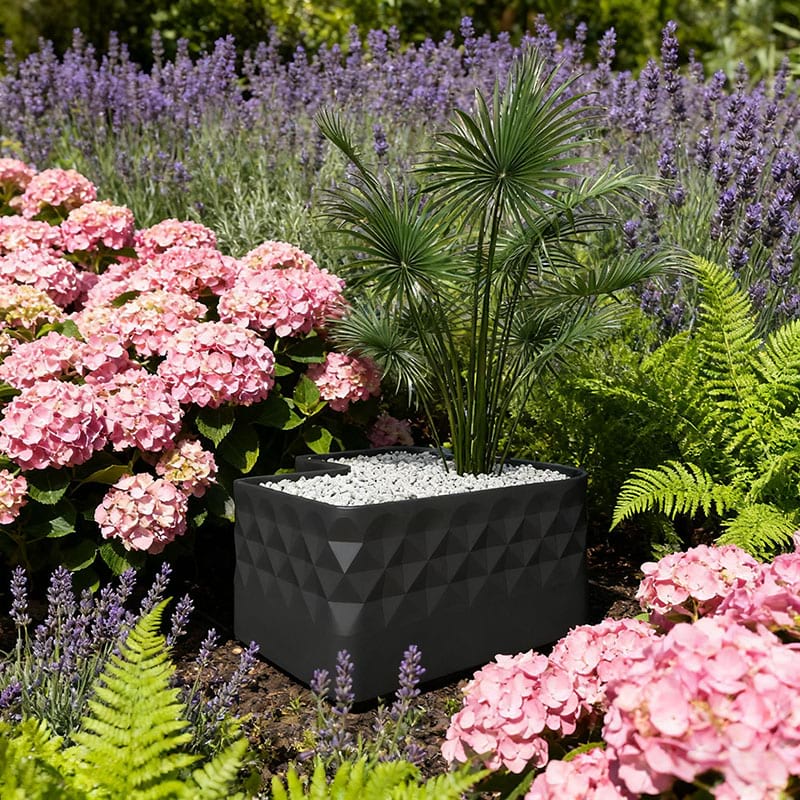
Not all vegetables require the same Planter Box depth. Below is a categorized breakdown to help determine optimal measurements.
Shallow-rooted crops thrive in a Planter Box that is 6–8 inches deep.
Examples include:
Lettuce
Spinach
Arugula
Green onions
Herbs (basil, cilantro, parsley)
Shallow vegetables benefit from:
Quick drainage
Warmer soil temperatures
Efficient space use
For agricultural seedling bases (seedling cultivation), a shallow Planter Box is ideal for early-stage growth before transplanting.
Advantages:
Lower soil cost
Lightweight structure
Easy relocation
Suitable for rooftop gardens
A water-saving type Planter Box is especially effective for leafy greens since it reduces frequent irrigation.
Medium-root vegetables require a Planter Box depth of 10–14 inches.
Examples include:
Peppers
Bush beans
Eggplant
Strawberries
Cucumbers
These crops require more space for stable anchoring and fruit production. A breathable and drainable Planter Box prevents excess moisture buildup.
Benefits of proper depth:
Improved fruit yield
Stable root anchoring
Better nutrient absorption
Reduced transplant shock
In vegetable and fruit greenhouse cultivation, a 12-inch Planter Box is standard for controlled production.
Deep-rooted crops demand a Planter Box depth of 18–24 inches or more.
Examples include:
Tomatoes
Carrots
Potatoes
Sweet potatoes
Radishes (large varieties)
Deep soil volume allows:
Vertical root expansion
Larger fruit production
Enhanced drought tolerance
Higher nutrient storage capacity
For agricultural cooperative large-scale planting, standardized deep Planter Box systems ensure consistent output.
| Vegetable Type | Recommended Planter Box Depth |
|---|---|
| Leafy Greens | 6–8 inches |
| Peppers & Beans | 10–14 inches |
| Tomatoes | 18–24 inches |
| Carrots | 18–24 inches |
| Herbs | 6–8 inches |
Today’s Planter Box solutions extend far beyond traditional wood containers.
The Agricultural Planting Box has gained popularity due to:
Durability
Thermal insulation
Lightweight structure
Long lifespan
Enhanced root insulation
Compared to wooden or metal alternatives, this type of Planter Box offers superior moisture resistance and root temperature control—critical in protected agricultural planting.
| Feature | Polyurethane Planter Box | Wooden Box |
|---|---|---|
| Lifespan | 10+ years | 3–5 years |
| Insulation | High | Moderate |
| Water Resistance | Excellent | Low |
| Maintenance | Minimal | Regular |
Integrated planting involves combining multiple crops within a single Planter Box ecosystem. Depth plays a strategic role:
Deep-root plants at center
Shallow-root crops along edges
Companion planting for pest control
This approach improves agricultural ecology and increases yield per square meter.
Water-saving type Planter Box designs include:
Self-watering reservoirs
Capillary irrigation systems
Controlled drainage valves
Benefits:
30–50% water reduction
Consistent soil moisture
Reduced labor
Such systems are ideal for urban farm planting and vegetable and fruit greenhouse cultivation.
Selecting the correct Planter Box depth is just the first step. Follow these best practices to maximize results.
Your Planter Box material influences insulation, durability, and sustainability.
Options:
Wood
Metal
Plastic
Polyurethane Planting Box
For agricultural seedling bases (seedling cultivation), lightweight yet durable materials are recommended.
A high-quality Planter Box must be breathable and drainable. Add:
Drainage holes
Gravel base
Aerated soil mix
This prevents root suffocation and supports root system protection.
Seedlings require shallow Planter Box systems initially, then deeper boxes during fruiting stages. In protected agricultural planting, staged container systems optimize productivity.
Even the best Planter Box cannot compensate for poor soil. Maintain:
Organic compost levels
pH balance
Microbial diversity
Healthy soil enhances agricultural ecology and sustainable output.
In urban farm planting, space efficiency is crucial. Vertical stacking of deep Planter Box systems allows:
Higher density production
Efficient irrigation
Improved sunlight distribution
For agricultural cooperative large-scale planting, uniform Planter Box depth ensures standardized growth cycles, predictable harvest timelines, and mechanized compatibility.
Research and field observations show:
6-inch shallow Planter Box → Ideal for leafy greens (fast harvest)
12-inch Planter Box → Balanced growth for fruiting vegetables
24-inch deep Planter Box → 20–40% higher tomato yield compared to shallow containers
Depth influences:
Root expansion
Nutrient storage
Water buffering
Stress tolerance
In vegetable and fruit greenhouse cultivation, optimizing Planter Box depth can increase annual yield cycles.
Modern farming trends prioritize sustainability. A well-designed Planter Box supports:
Soil conservation
Reduced water waste
Controlled fertilizer usage
Lower environmental impact
When combined with integrated planting systems, the Planter Box becomes a core tool in sustainable agricultural ecology.
A Planter Box for tomatoes should be at least 18–24 inches deep to allow full root expansion and maximize fruit production.
No. Carrots require a deep Planter Box of at least 18 inches to prevent root deformation.
A (Polyurethane) Agricultural Planting Box is highly recommended for vegetable and fruit greenhouse cultivation due to insulation and durability.
Not necessarily. The ideal Planter Box depth depends on crop type. Excess depth wastes soil and increases cost.
Yes. A water-saving type Planter Box significantly reduces irrigation frequency and supports sustainable urban farm planting.
So, how deep should a Planter Box be?
The answer depends on what you grow:
6–8 inches for shallow roots
10–14 inches for medium roots
18–24 inches for deep roots
Choosing the correct Planter Box depth ensures root system protection, maximizes yield, supports agricultural ecology, and enhances both small-scale and agricultural cooperative large-scale planting operations.
As urban farm planting, protected agricultural planting, and vegetable and fruit greenhouse cultivation continue to expand globally, investing in the right Planter Box—especially innovative solutions like the Polyurethane Planting Box—is no longer optional. It is essential for efficient, sustainable, and high-yield food production.
By aligning container depth with crop needs, growers can achieve healthier plants, stronger root systems, and significantly improved harvest results.


