
English 
T: +86-139-2641-8287
No.51, Chuangye Road, Taiping Town, Conghua District, Guangzhou City, Guangdong Province, China


Views: 0 Author: Site Editor Publish Time: 2026-03-10 Origin: Site


Flower boxes are a fantastic way to bring life, color, and greenery to any indoor or outdoor space. Whether you’re cultivating a balcony garden, decorating a patio, or engaging in municipal procurement model landscaping projects, flower boxes can transform environments. However, many gardeners unknowingly make mistakes that compromise plant health, growth, and aesthetic appeal. Understanding these pitfalls—and how to avoid them—is essential for successful gardening. This comprehensive guide explores the most common flower box mistakes and provides actionable solutions, emphasizing plant health, practical design, and longevity.
One of the most overlooked errors is selecting a flower box that is too small or too large for the plants you intend to grow. The size of your flower box directly impacts root growth, soil moisture, and overall plant health.
Consequences of the Wrong Size Flower Box:
Stunted root systems due to limited space.
Poor soil moisture regulation—too small boxes dry out quickly, while too large boxes can hold excess water, causing root rot.
Increased maintenance, as small flower boxes require more frequent watering.
Choosing the right size is particularly crucial when working with plants that require large-capacity soil volumes for optimal growth. In addition, using crack-resistant materials ensures that even larger boxes withstand environmental stressors such as temperature fluctuations and physical pressure. For urban environments or municipal procurement model projects, durability and appropriate sizing are critical factors in reducing long-term maintenance costs.
The ideal flower box size depends on the plant species and their expected root growth. As a general guideline:
Small annuals: Minimum depth 6–8 inches.
Medium-sized flowers and herbs: Minimum depth 10–12 inches.
Large shrubs or perennial plants: Minimum depth 14–18 inches.
Table: Flower Box Size Recommendations
| Plant Type | Recommended Box Depth | Recommended Box Width |
|---|---|---|
| Small annuals | 6–8 inches | 8–10 inches |
| Medium flowers/herbs | 10–12 inches | 12–18 inches |
| Large perennials | 14–18 inches | 18–24 inches |
By choosing an appropriate size, you enhance the low-temperature adaptability of plants, since deeper soil retains warmth better during colder months. Large-capacity boxes are ideal for ensuring that even under low-temperature stress, plants can survive and thrive.
A plant spacing calculator is an invaluable tool for gardeners unsure about flower box size requirements. By entering the plant type and desired spacing, the calculator suggests optimal flower box dimensions. This reduces overcrowding, promotes proper low-temperature adaptability, and supports robust root systems. Many urban planners and commercial horticultural operations use digital spacing tools for efficient municipal procurement model planning, ensuring maximum aesthetic and functional benefits.
Drainage is one of the most critical aspects of flower box design. Without adequate drainage, water can accumulate at the bottom of the flower box, suffocating roots and causing root rot.
Plants need large-capacity root zones with both moisture retention and proper aeration. Overly wet soil disrupts oxygen flow, impairing nutrient uptake and stunting growth. Low-lying boxes, or boxes without drainage holes, increase this risk.
Yellowing leaves.
Mold or algae growth on the soil surface.
Foul odor emanating from the soil.
Roots turning brown or soft when inspected.
Pro Tip: Opt for crack-resistant materials like reinforced plastic, composite, or treated wood with pre-drilled drainage holes to ensure consistent water flow while protecting the integrity of the flower box over time.
Even with good drainage, improper watering can doom your flower box plants. Both under- and over-watering are common mistakes that stress plants and reduce their lifespan.
| Condition | Recommendation |
|---|---|
| Dry soil | Water thoroughly, allow soil to dry slightly |
| Overly wet soil | Reduce watering frequency, check drainage holes |
| Mixed conditions | Use a moisture meter for precision |
Plants in flower boxes often experience “thirsty plant syndrome,” especially in smaller or large-capacity boxes exposed to sun or wind. This occurs when soil dries out unevenly, leaving some roots parched while others remain waterlogged. The solution is a combination of proper flower box sizing, drainage, and plant selection based on sun exposure.
Consistency is key. Consider using self-watering flower boxes, which provide slow-release water to the roots while reducing the risk of overwatering. These boxes enhance plant health and improve low-temperature adaptability by maintaining moisture even during cooler months when evaporation rates are lower.
Modern self-watering flower boxes integrate water reservoirs and wicking systems, ensuring uniform moisture distribution. This feature is particularly valuable in municipal procurement model installations or commercial landscapes where consistent plant health is necessary, and maintenance personnel may have limited time.
A flower box is only as effective as the placement of the plants inside it. Ignoring sunlight requirements is a common mistake that leads to poor growth, lackluster blooms, and leggy or stressed plants.
When selecting plants, consider their light preferences:
Full sun: Marigolds, petunias, geraniums.
Partial sun: Impatiens, begonias.
Shade: Ferns, hostas.
Tip: Pair plant selection with flower box orientation to maximize sun exposure without overheating or drying the soil.
Monitor the flower box throughout the day to determine the actual sunlight exposure. Signs of insufficient light include pale leaves and reduced flowering, while excessive light leads to scorched leaves. Choosing the correct low-temperature adaptability plants ensures they can tolerate temperature variations alongside sunlight intensity.
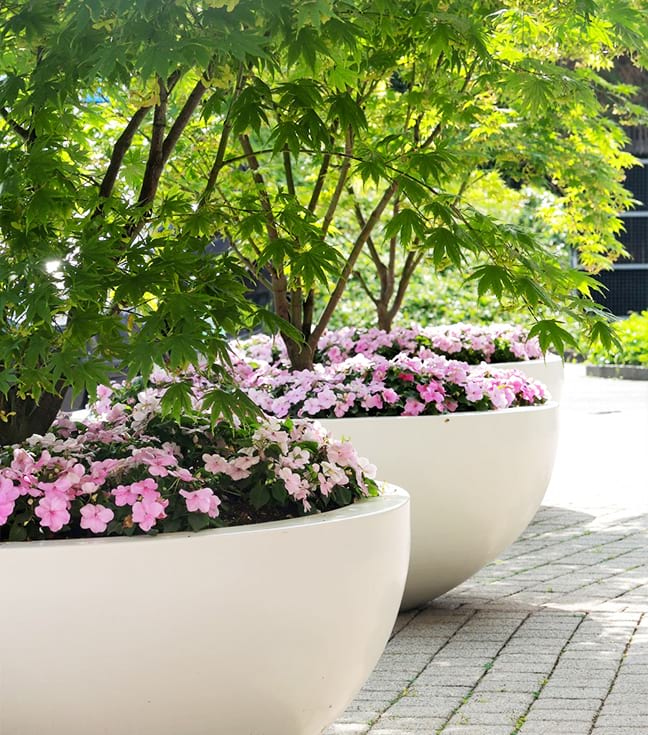
Even when your plants are healthy, poor arrangement can diminish the visual impact of a flower box. Proper arrangement balances height, texture, and color.
This popular design method enhances aesthetic appeal and ensures plant health.
Thrillers are the focal plants, typically tall, dramatic, and eye-catching. Examples include ornamental grasses, tall salvias, or sunflowers. Place these at the back or center to create height and visual interest.
Spillers trail over the edges, softening the flower box borders. Good examples include ivy, sweet potato vine, or creeping jenny. They help integrate the flower box into the surrounding landscape.
Fillers occupy the remaining space and complement the thriller and spiller plants. Annuals like petunias, pansies, or small perennials add color and density, filling gaps and enhancing visual cohesion.
Selecting the right flower box material is equally critical as plant choice and arrangement. Brands like Root & Vessel offer crack-resistant and large-capacity planters, ideal for both home and municipal procurement model installations. Key features include:
Durable construction to withstand low temperatures and environmental stress.
Sleek design compatible with contemporary urban spaces.
Self-contained options that enhance moisture retention and reduce maintenance.
When choosing a flower box, consider your climate, plant types, and maintenance capacity. Low-temperature adaptability, crack-resistant materials, and large-capacity designs ensure longevity and reduce long-term gardening headaches.
Q1: Can I mix sun-loving and shade-loving plants in the same flower box?
It’s best to group plants with similar light requirements. Mixed lighting can stress certain plants, reducing bloom and growth performance.
Q2: How often should I water a flower box?
Frequency depends on plant type, box size, and weather. Self-watering flower boxes simplify this, providing consistent moisture with minimal monitoring.
Q3: Are large-capacity flower boxes necessary for perennials?
Yes. Perennials need more space for root growth and water retention, ensuring low-temperature adaptability and healthy blooms.
Q4: What materials are best for municipal flower box installations?
Crack-resistant plastics, composite materials, or treated wood are recommended. They withstand environmental stress and reduce maintenance costs in municipal procurement model projects.
Q5: How do I prevent poor flower arranging mistakes?
Use the thriller-spiller-filler approach for balanced visual appeal. Ensure height variation, trailing plants, and filler blooms complement each other.
Q6: Can flower boxes survive winter conditions?
Yes, with low-temperature adaptability plants and crack-resistant materials. Adding mulch can further protect roots in colder months.
Q7: Are self-watering flower boxes effective for low-maintenance gardening?
Absolutely. They maintain consistent moisture, reduce water waste, and minimize guesswork, making them ideal for busy gardeners or large-scale municipal procurement model landscapes.
Q8: How do I know if my flower box has drainage issues?
Signs include standing water, yellowing leaves, and moldy soil surfaces. Installing pre-drilled holes or adding a large-capacity drainage layer solves most problems.
In conclusion, avoiding common flower box mistakes requires attention to sizing, drainage, watering, sunlight, and arrangement. By selecting crack-resistant, large-capacity planters and leveraging modern tools like self-watering flower boxes and plant spacing calculators, gardeners can ensure healthy plants, visually appealing arrangements, and reduced maintenance. Combining these best practices with careful plant selection and thoughtful design transforms any space into a vibrant, flourishing garden.


