
English 
T: +86-139-2641-8287
No.51, Chuangye Road, Taiping Town, Conghua District, Guangzhou City, Guangdong Province, China


Views: 0 Author: Site Editor Publish Time: 2026-04-14 Origin: Site


The best way to select Indoor Planters for a commercial project is not to start with color. A better sequence is to look at the space first, then confirm size, water control, material, and finish. That order leads to stronger results because commercial interiors need more than decoration. They need products that work well in daily use. Rovis, with nearly two decades of experience in composite materials and large-scale production, understands that planter selection is really about performance over time. When the planter fits the space from the beginning, the project feels more polished and stays easier to manage.
A good planter choice begins with the room itself. Before comparing textures or colors, it is important to understand the conditions the planter will face every day. Light levels affect plant choice and maintenance planning. Traffic affects how much durability is needed. Cleaning frequency matters because some spaces are wiped down constantly while others are not. Floor sensitivity matters because wood, tile, stone, carpet, and vinyl all react differently to moisture and movement. The intended role of the planter matters too, because a divider in a lounge needs something very different from a small planter beside a reception desk.
Many commercial projects become difficult because appearance is considered first and use comes later. The scale may be wrong, the footprint may interrupt movement, or the watering setup may create extra work. Reading the space first gives the whole decision process more clarity.
Commercial interiors may belong to one project, but they do not behave the same way. A lobby needs presence and durability because it handles the most visual pressure and the most daily traffic. A corridor needs a slimmer footprint so greenery does not interrupt movement. A meeting room usually needs a quieter planter that supports focus and comfort rather than strong visual impact.
This is why one planter type rarely works everywhere. Different zones need different shapes, visual weight, and durability levels. A planter that looks excellent in a spacious entrance may feel intrusive in a narrow walkway. A soft, compact planter that works well in a meeting room may look too weak in a large reception area. Good selection depends on using the right planter in the right place.
Planter selection is often discussed as if it were only about the plant. In commercial interiors, that is not enough. Floor protection matters just as much. A planter is not a good choice if it leaves water marks, creates moisture risk, or complicates cleaning.
That is why waterproof construction and controlled drainage should be seen as interior protection decisions, not only planting decisions. A commercial planter must support healthy plant care, but it also needs to protect the space around it. Sealed bodies, stable bases, and better water management all matter because interiors carry costs far beyond the planter itself.
This becomes even more important in offices, hotels, showrooms, and retail settings where the floor is part of the overall brand image. Even minor staining can weaken the impression the space is meant to create.
Decision Factor | What to Look For | Feature to Prioritize | Common Mistake |
Space type | Traffic, openness, visual role | Right shape and footprint | Using the same planter everywhere |
Floor condition | Moisture sensitivity, cleaning needs | Waterproof body, stable base | Focusing only on plant care |
Planting method | Direct planting or drop-in pots | Drainage flexibility | Ignoring maintenance needs |
Size | Room scale and plant root needs | Balanced dimensions | Going oversized too early |
Material | Weight, durability, upkeep | Lightweight strength | Choosing by appearance alone |
Finish | Brand fit and cleaning frequency | Easy-clean surface | Ignoring long-term presentation |
Size affects visual balance, circulation comfort, plant health, and ease of maintenance. A planter should support the root needs of the plant, but it also has to fit the room without overwhelming it. In commercial spaces, these two requirements need to work together.
A planter that is too small can look weak, especially in a large lobby or open waiting area. A planter that is too large brings a different problem. It can take up too much floor area, interrupt movement, and make the room feel crowded. In some spaces, oversized planters even distract from furniture layouts or product displays they were meant to support.
The best choice usually comes from balancing plant requirements with how people actually use the room. That is why floor plans and circulation patterns matter as much as plant size.
It is easy to assume a bigger planter will always create a stronger impression. In practice, larger only works when the space can support it. Oversized planters often reduce flexibility, increase handling difficulty, and make cleaning more awkward.
This is especially true in reception zones, corridors, and mixed-use office areas where circulation must stay open. A planter that looks dramatic on its own may become inconvenient once people need to move around it every day. Larger planters also need more growing media, more water, and more effort during planting changes. That does not make them wrong. It only means scale should be matched to the space, not chosen for impact alone.
Different planter formats solve different footprint issues. Slim planters work well in corridors, beside walls, and near entrances where width is limited. They add height and greenery without reducing comfort.
Square planters fit corners neatly, sit naturally beside seating, and often feel balanced in smaller commercial zones. They are flexible enough for meeting rooms, lounges, and compact public areas.
Modular formats are especially useful in larger interiors. They help create visual continuity across several spaces without relying on one oversized unit. A modular arrangement can divide a lounge, frame a walkway, or build a repeatable planting system across multiple locations. That makes planning and expansion much easier.
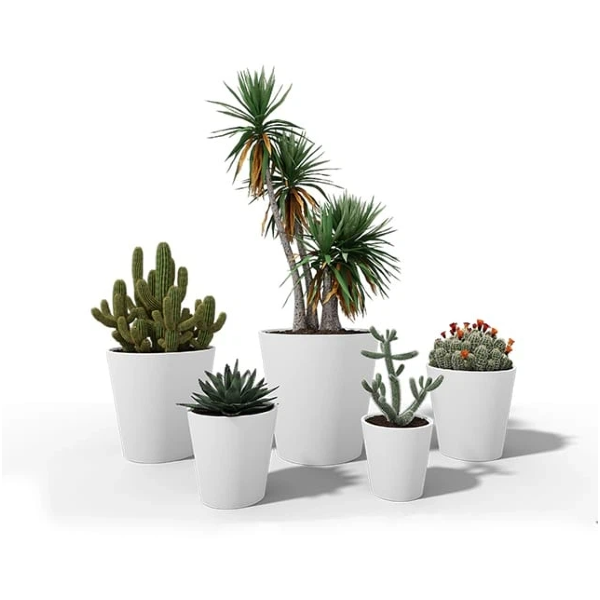
One of the most overlooked parts of planter selection is who will maintain it after installation. A planter may look right in a design drawing, but if the watering method is messy or inconvenient, the daily reality will be much less successful. Commercial projects need water setups that fit the maintenance habits of the team responsible for them.
That means thinking about how plants will be watered, how extra water will be contained, how often plants will be replaced, and how easy the planter will be to clean around. A good planter should support maintenance instead of making it harder.
Both systems can work well, but they serve different needs. Direct planting often creates a more integrated look and may suit longer-term installations where the planting design is meant to stay in place. It can feel more complete in feature planters at entrances or in statement areas.
Drop-in grow pots offer greater convenience. They make plant replacement faster, simplify seasonal updates, and reduce disruption when a plant needs to be changed. For many offices, hotels, and retail spaces, that is a practical advantage because maintenance teams can work faster with less mess.
The better option depends on how the space is managed. If frequent changes are expected, drop-in pots are often more efficient. If the installation is designed to stay stable for longer, direct planting may be the better fit.
Indoor spaces need cleaner water control than outdoor projects. A commercial interior cannot afford visible drips, exposed water collection, or unstable bases. Hidden trays help contain excess water while keeping the display visually complete. Sealed bases protect floors and reduce the chance of moisture reaching sensitive surfaces.
These details matter because indoor planters sit close to expensive surroundings. Flooring, furniture, counters, and rugs are all part of the environment the planter must respect. A safer indoor setup is not only about plant care. It is also about protecting the wider space from avoidable damage.
Finish is where design, maintenance, and cost come together. A planter surface has to look right in the room, but it also needs to stay presentable through repeated cleaning and daily use. In commercial interiors, a finish should support the brand image without becoming difficult to maintain or expensive to replace too soon.
That is why finish should come after the practical issues have already been settled. Once the size, material, and water setup are right, the surface can be selected to suit both the room and the budget.
Commercial interiors usually work best when planter finishes support the room rather than compete with it. Neutral colors often offer the most flexibility because they work with different flooring materials, furniture finishes, and wall treatments. At the same time, some projects benefit from custom colors that reinforce brand identity or create stronger visual consistency across sites.
Texture also changes how a planter behaves visually. Smooth finishes can suit sharper, more architectural spaces, while lightly textured surfaces may hide minor wear more easily. What matters is that the finish supports the design language of the room and stays consistent where consistency matters most.
This becomes especially useful for chains, office groups, and hospitality projects with more than one location. Finish consistency helps create a recognizable visual standard and makes repeat purchasing easier.
Initial price is only one part of planter cost. Shipping damage, replacement frequency, cleaning effort, and long-term appearance all affect real value. A cheaper planter may not stay cheaper if it needs to be replaced more often or takes more effort to maintain.
This is where material quality changes the decision. Lighter yet durable construction can reduce transport risk and make installation easier. Easy-clean surfaces reduce upkeep pressure. Better resistance to dents, stains, and water problems helps the planter keep its appearance longer. When these factors are considered together, the cost picture becomes much clearer.
Rovis develops planter solutions with this broader view in mind. As a manufacturer with extensive composite materials experience, the company supports projects that need more than a short-term decorative effect. Commercial buyers often need products that stay easier to handle, more stable in appearance, and more reliable across multiple sites.
Choosing Indoor Planters becomes much easier when the planter is treated as part of the space system rather than a last-minute accessory. When room conditions are understood first, when size fits both the plant and the footprint, when water control matches the maintenance routine, and when finish supports both brand image and long-term value, the decision becomes far more practical. That is the difference between filling a space and improving it. Rovis helps customers achieve that result with products designed for daily commercial use. If you are planning a new project, contact us to explore the right commercial indoor planters for your space.
Start with the space itself. Look at traffic, floor sensitivity, light conditions, cleaning frequency, and the role the planter needs to play before comparing style.
No. A larger planter can create impact, but it can also waste floor space, interrupt circulation, and make maintenance harder. The best size is the one that fits both the plant and the room.
They are often more convenient when plant replacement or seasonal updates are expected. Direct planting works well for longer-term installations, while drop-in pots usually make maintenance faster and cleaner.
A longer-lasting planter can reduce replacement frequency, shipping damage, and upkeep effort. Over time, that often makes it a better value than a lower-cost option that wears out more quickly.


