
English 
T: +86-139-2641-8287
No.51, Chuangye Road, Taiping Town, Conghua District, Guangzhou City, Guangdong Province, China


Views: 0 Author: Site Editor Publish Time: 2026-07-11 Origin: Site


We often see stunning container gardens on Pinterest or Instagram. Yet, many of these perfect arrangements degrade within weeks. The common failure rate in container gardening frustrates both beginners and seasoned enthusiasts alike. People usually blame their gardening skills, but the real issue lies elsewhere.
Beautiful Garden Planters rely less on initial plant selection and more on correct structural environments. You must prioritize moisture control, adequate root space, and material durability. Without these foundational elements, even the healthiest nursery plants will struggle to survive.
This guide breaks down essential evaluation criteria for your next project. We will explore how to select, prepare, and design containers engineered for long-term viability. You will learn actionable strategies to guarantee maximum visual impact throughout the growing season. Let us transform your outdoor spaces into thriving ecosystems.
Material dictates maintenance: Porous materials require higher watering frequency; non-porous materials demand precise drainage.
Volume equals stability: Larger planters offer better soil-moisture retention and temperature buffering, reducing plant stress.
Structural design rules: Utilizing the "Thriller, Filler, Spiller" framework ensures scalable, predictable aesthetic results.
Infrastructure first: High-quality potting mix and unobstructed drainage holes are non-negotiable success criteria; standard garden soil will fail in containers.
The material of your container dictates the daily maintenance required for plant survival. Many gardeners buy containers solely for their aesthetic appeal. They ignore how the vessel's composition interacts with local weather conditions. You must treat container material as the foundational infrastructure of your miniature garden ecosystem. Different materials offer distinct advantages and present unique operational challenges.
Terracotta and traditional clay remain incredibly popular. They offer high breathability, which allows air to reach plant roots easily. This porous nature actively pulls moisture from the soil. It makes terracotta excellent for preventing root rot. However, these materials are highly vulnerable to winter cracking. They possess poor frost compliance because absorbed water expands when it freezes, shattering the clay.
Resin and fiberglass represent modern engineering solutions. They are extremely lightweight, frost-resistant, and boast high durability. You will find them excellent for balconies or areas requiring frequent repositioning. Because they are non-porous, they trap moisture effectively. This feature reduces your watering frequency but requires you to monitor drainage aggressively.
Wood provides a beautiful, natural aesthetic and moderate root insulation. To ensure longevity, you must use rot-resistant varieties like cedar or teak. You should also install internal plastic liners to prevent wet soil from accelerating decay. Concrete and stone offer maximum durability and exceptional wind resistance. They will never blow over in a storm. However, they require permanent placement due to their excessive weight.
You must evaluate these materials across three distinct dimensions. Assess your micro-climate for frost risk. Determine structural weight limits if you garden on a balcony versus a ground-level patio. Finally, calculate the watering capacity you can manage, choosing between porous and non-porous options accordingly.
Material Type | Porosity | Frost Resistance | Weight Class | Best Application Scenario |
|---|---|---|---|---|
Terracotta / Clay | High | Low | Medium | Warm climates, drought-tolerant plants |
Resin / Fiberglass | None | High | Light | Balconies, frequent repositioning |
Wood (Cedar/Teak) | Moderate | Medium | Medium | Rustic designs, insulated root zones |
Concrete / Stone | Low | High | Heavy | Permanent patio installations, windy areas |
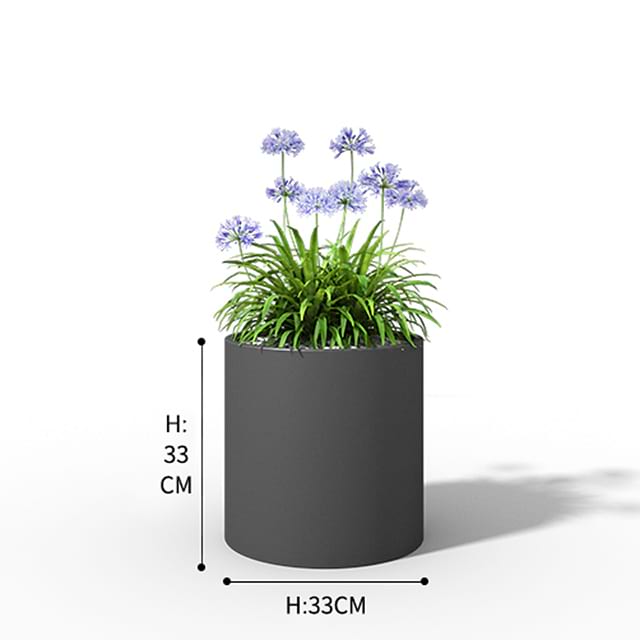
Undersized containers represent a massive risk factor in gardening. They lead directly to rapid moisture evaporation and severe nutrient depletion. When plants outgrow their pots, they become root-bound. This creates a high failure rate because roots cannot absorb necessary resources. Many beginners buy small pots because they look proportionate to young nursery plants. This is a critical mistake.
Your primary success criteria must involve future growth planning. You should select Garden Planters that easily accommodate the mature root system of the intended arrangement. Do not size your container based on the nursery pot size. Plants grow rapidly during peak season. A pot that looks slightly too large in May will be perfectly filled by July.
The implementation reality of larger soil volumes is undeniable. Soil acts as a thermal insulator. Larger volumes buffer delicate roots against extreme temperature swings. A small pot bakes in the afternoon sun, killing root tips. A large container maintains a stable internal temperature. Furthermore, increased soil volume reduces your required watering frequency. You can move from exhausting daily watering to a manageable bi-weekly schedule.
To implement this sizing metric effectively, follow these logical steps:
Research mature dimensions: Check plant tags to find the final spread and depth of each plant.
Calculate root space: Add an extra two inches of depth and width beyond the estimated mature root ball.
Account for combinations: If mixing multiple species, multiply the space requirements accordingly.
Apply shortlisting logic: When evaluating between two sizes for a mixed arrangement, always default to the larger option to ensure scalable plant growth.
Watch out for the temptation to fill large pots entirely with expensive soil. We will discuss soil composition next, but remember that the sheer volume of a proper container requires strategic filling to remain cost-effective and structurally sound.
If you fail to plan your drainage, you plan to fail. Stagnant water is the primary cause of planter failure worldwide. Roots need oxygen just as much as they need water. When soil remains completely saturated, roots literally drown. This leads to fungal infections and rapid plant death.
We must address a pervasive and dangerous gardening myth. Many people believe putting a layer of gravel or rocks at the bottom of a pot improves drainage. This practice actually creates a "perched water table." Water does not move easily from a fine-textured material (soil) to a coarse-textured material (rocks) until the soil is completely saturated. Placing rocks at the bottom simply moves the drowning zone closer to your plant's roots. It accelerates root rot rather than preventing it.
Strict compliance with drainage best practices is non-negotiable. First, you must verify the presence of pre-drilled drainage holes. Every container needs at least one hole with a minimum 1/2 inch diameter. If you buy decorative Garden Planters without holes, you must drill them yourself before planting. Second, elevate your planters slightly off flat surfaces. Use pot feet or small wooden blocks. This ensures water evacuation and prevents patio staining.
Resource allocation regarding soil composition is equally critical. You should never use heavy topsoil or ground dirt in containers. Garden dirt compacts quickly inside a pot, squeezing out oxygen. Instead, invest in high-quality, sterile potting mixes. These mixes are engineered specifically for container environments. They utilize ingredients like peat moss or coco coir for moisture retention.
An ideal potting mix also incorporates perlite or vermiculite. These lightweight volcanic minerals create tiny air pockets throughout the soil. They facilitate proper aeration and moisture-wicking. A well-engineered soil mix feels light and fluffy in your hands. It absorbs water easily but lets the excess drain away within seconds. Upgrading your soil is the most cost-effective insurance policy for your container garden.
Creating visually stunning containers does not require a degree in landscape architecture. The industry-standard approach relies on a simple, foolproof framework. We call it the "Thriller, Filler, Spiller" methodology. This system helps you build visually balanced garden environments without overcrowding the root zone. It breaks plant selection down into three structural roles.
Thriller: This acts as your tall, architectural focal point. You place it in the center of a round pot or the back of a container placed against a wall. It provides vertical impact. Excellent examples include ornamental grasses, tall Canna lilies, or upright elephant ears.
Filler: These are mid-size, mounding plants. They surround the thriller, conceal bare soil, and build visual mass. They create the bulk of your color palette. Reliable choices include Coleus varieties, bright Begonias, or bushy petunias.
Spiller: These feature trailing vines that cascade over the edges. They soften the planter's hard architectural lines and ground the arrangement. Popular options include Sweet Potato Vine, Creeping Jenny, or trailing lobelia.
While this aesthetic framework is powerful, you must strictly observe compatibility constraints. You cannot select plants based on color alone. Group plants strictly by their shared environmental needs. They must share identical light requirements and water consumption rates.
Mixing drought-tolerant succulents with moisture-heavy ferns guarantees partial failure. If you water enough for the fern, the succulent rots. If you withhold water for the succulent, the fern crisps up and dies. Always check the plant tags before assembling your trio. Ensure all selected plants thrive in "Full Sun" or all thrive in "Part Shade." This disciplined approach ensures scalable, predictable aesthetic results throughout the entire summer.
Think beyond the individual pot. You must treat your garden containers as modular landscape architecture. This concept, often called "potscaping," involves arranging multiple containers to define outdoor spaces. You can create temporary privacy walls, frame entryways, or guide foot traffic using strategically placed pots.
Your evaluation dimensions for placement should consider scale, proportion, and flow. A single small pot on a massive patio looks abandoned. Conversely, an oversized concrete trough on a tiny balcony feels oppressive. You must balance the visual weight of your containers against the surrounding architecture.
To execute potscaping successfully, employ specific tactical rules. The "Rule of Three" is a fundamental design principle. Group your pots in odd numbers. Use varying heights and widths within the grouping. This approach creates visual depth rather than rigid, unnatural lines. A tall slender pot, a wide bowl, and a medium cylinder create a highly appealing asymmetric balance.
Micro-climate mapping is your second execution tactic. Every patio or deck has distinct micro-climates. One corner might act as a wind tunnel, while another traps afternoon heat. Map these zones before placing permanent installations. Place heavy, sun-loving arrangements on heavy-duty dollies or caster wheels before filling them with dirt. This allows effortless seasonal repositioning to chase the sun or hide from severe storms.
Potscaping Strategy | Execution Method | Visual / Functional Benefit |
|---|---|---|
Rule of Three | Group pots in odd numbers (3, 5, 7) | Creates natural asymmetry and depth |
Varying Heights | Mix tall cylinders with low bowls | Forces the eye to travel vertically |
Mobility Planning | Install hidden casters or dollies | Enables micro-climate adjustments |
Color Echoing | Repeat one plant color in multiple pots | Unifies disparate container styles |
Your next-step actions require careful planning. Audit your available outdoor space thoroughly. Assess your daily sunlight hours by tracking shadow movement across your patio. Finalize your material needs based on weight limits and frost risks before purchasing your planter vessels. Preparation prevents costly seasonal mistakes.
Long-term container garden success requires treating your vessels as miniature ecosystems. You must prioritize material science, adequate volume, and strict drainage rules over impulsive plant purchases. A beautiful arrangement fails quickly if its roots bake in an undersized, poorly draining pot. By utilizing frameworks like the Thriller, Filler, Spiller method, you guarantee balanced growth and stunning aesthetics.
Begin your project by measuring your designated outdoor spaces. Determine your specific structural weight capacities and local climate constraints. Source your baseline structural containers first. Once you secure the right foundation, you can confidently select your seasonal foliage. Take action today by mapping your patio sunlight zones and drilling those essential drainage holes.
A: Watering frequency varies significantly by material and size. Terracotta pots in full summer sun may require daily watering. Large resin or fiberglass pots might only need water twice a week. You should always test moisture manually. Insert your finger two inches below the soil surface; if it feels dry, apply water until it drains out the bottom.
A: Yes, if you use porous materials like terracotta or ceramic. Freezing wet soil expands violently, which will crack and destroy the vessel. You should empty these, clean them, and store them indoors. Frost-proof materials like high-density resin, fiberglass, or thick concrete can safely remain outdoors year-round.
A: Partial replacement is highly recommended. Plant roots deplete essential nutrients, and the organic matter compacts over a growing season. You do not need to replace everything. Remove the top third of the old dirt, loosen the remainder, and blend in fresh, aerated potting mix alongside a quality slow-release fertilizer.


